Book Qlub 9! Vernor Vinge's the Peace War

Yup, we did it again.

With the holidays, new year, college schedules, and life management, it took us a bit to get this Book Qlub meet up together. That and someone in the group stole someone else's book. Theft is not normally an issue in Book Qlub, but as we get larger it's getting harder to police all members. This all led to a heated debate over whether or not to infect Qlub-members with a genetically modified virus that can access the internet and report on members' activities and allow for emotional reconditioning. The motion wasn't seconded and has been shelved, for now.

We met up in the Inner Richmond, over at the Bitter End to discuss Vernor Vinge's The Peace War. Nominated for Hugo in 1985, it's a pretty standard action/adventure scenario, with the two speculative elements being force-field bobbles and a 51-years-in-the-future setting. 1985 was an interesting time in Science Fiction. The nomination of the Peace War and its loss to seminal cyberpunk novel Neuromancer (a la William Gibson) perfectly encapsulates the cultural/generational shift in Science Fiction of the 80s. Bruce Sterling, in his zine "Cheap Truth", identified Vinge and his sequel to The Peace War ("The Ungoverned") as one of the "Pournelle Disciples", after Jerry Pournelle and his power concentrated military Science Fiction and "gung-ho technolatry". Pournelle wrote a portion of President Regan's Strategic Defense Initiative (aka: "Star Wars") and was very much in the mainstream of SF at the time, he and his "disciples" (Vinge, Niven, Drake) publishing from Tor and Baen books, whom Sterling described as "Naive space enthusiasts" who "believe that humanity will climb into the cosmos on a Pentagon payroll." In the case of the Peace War, substitute Lawrence Livermore National Laboratory (even if they are the antagonists in this story, they still hurl humanity into the future). Then along comes cyberpunk and Neuromancer, with hard-boiled plots of desperate characters economically exploited and politically disenfranchised living in a polluted world where corruption is legitimized as naked greed. Read: the future we are living. The only thing they missed were the iPads. Neuromancer won the Hugo... and Nebula and the Philip K. Dick award, the first novel to ever grab the triple crown of Science Fiction. This legitimized cyberpunk and near future SF. Interesting times, man.

But, this post is about The Peace War. Let's be clear: you don't read Vinge for his writing. His dialogue is forced, his characters mechanical, and his plots convenient and left with holes the Vandenburg Bobble couldn't fill. You read him for his ideas, for his sense of wonder. Which seemed to be lacking in this book.

We all agreed that the characters existed merely so Vinge could have pieces to move around to tell this pretty implausible story of a future society of tinkers dressed up as libertarians. Libertarians in name only. There's private police force, but Vinge doesn't explore this farther than naming it. And it's pretty laughable that his set up is that a bunch of administrators from Lawrence Livermore National Laboratory, what he calls the Lawrence Enclave, a bunch of bureaucrats on a government contract conspire to take over the world. I mean, why? They've already taken over the world with red-tape, and even if there was such a cabal, the decision to overthrow the government would die in committee. They'd need receipts and billable hours just to devise a plan. What's the charge code for conspiracy?

The bulk of the plot is about a blackmailed Mike Rosas, which didn't make any real sense (he could have got out of it any number of ways, not the least of which was killing his blackmailer right off). Much of the Wili storyline seemed reminiscent of Vinge's 1981 short story "True Names" about human-internet Singularities, and a tad convenient that suddenly there should arrive a young boy who is a crazy math genius right when the bobbles start bursting, but, hey, that was his story. There's some interesting applications of the bobbles and time travel that Vinge introduces at the end (the scene at the pass, when Wili bobbles the garrison for a night was pretty awesome). All in all, the Qlub seemed not overly impressed with the book, but not all that let down. It's a shame though, cause when Vinge is at his best, he's pretty impressive.

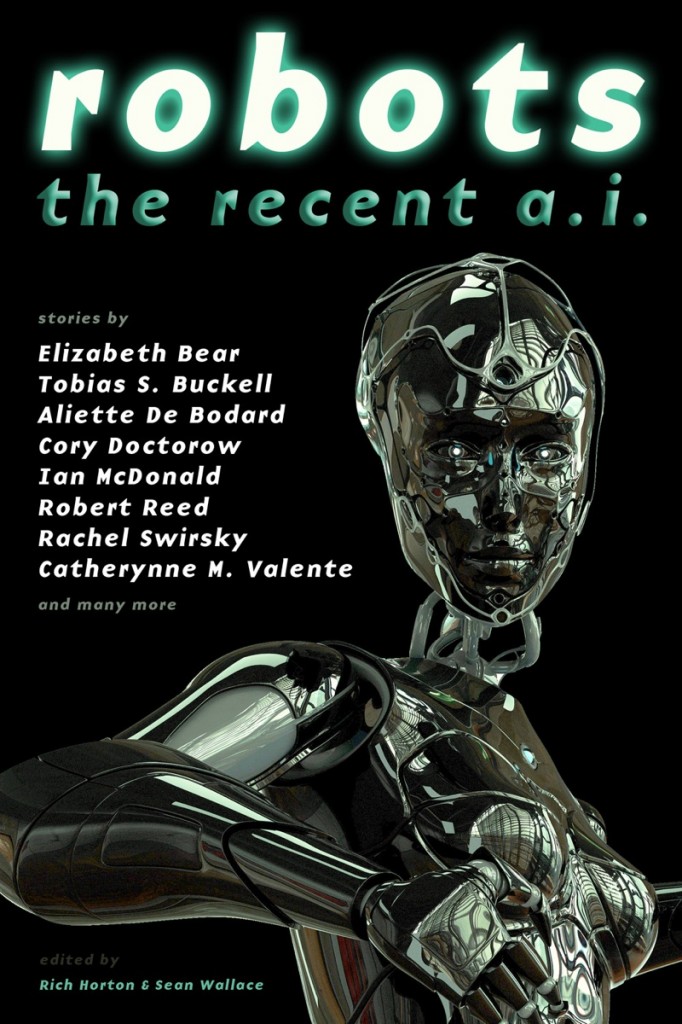
We rounded up the session with choosing our next book, a collection of robot stories:


Book Qlub 8: Ender's Game and Sci-Fi Weekend

What a Weekend!

First, some of us (one of us) made it out to the SF in SF reading  by Kim Stanley Robinson and Cecilia Holland. The readings were great, especially Kim Stanley Robinson's dialogue text which he and Cecilia Holland acted out. If you've never been to a reading at SF in SF, you should think about checking it out. To date, they've raised $25,000 for local charities, all off booze and donations! It's great! Plus the question and answer portion, moderated by Terry Bisson (They're Made out of Meat), is great. We had an awesome discussion of book proposals, titles, and a Brown University post-modern deconstruction and Marxist-dialectic debate on the connection between history and Science Fiction, with Kim Stanley Robinson arguing that Science Fiction is, at it's most basic level, a Historical Literature, inasmuch that it is a literature that is presumably connected to this reality's history to the here-and-now, which is unknowable, so actually connected to some point or another. We also talked about the Raiders.

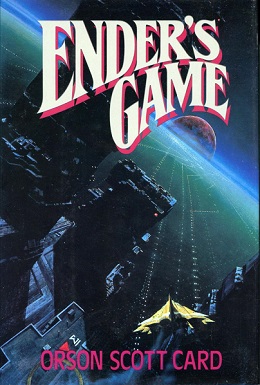
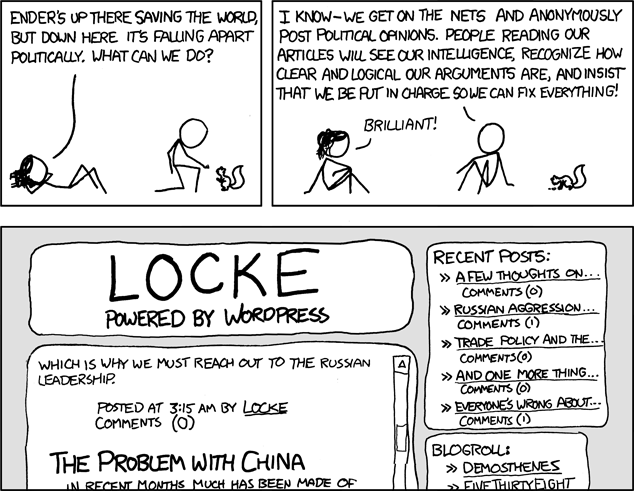
Then: BOOK QLUB 8! This time around we met up at Zeitgeist for veggie burgers, beers, and a discussion of Ender's Game in 45 degree weather. The Qlub had a variety of reactions to the book, though most of us agreed that while Orson Scott Card did not write a particularly sophisticated book (somewhere around a 12th Grade reading level, which might explain its great popularity), he was still effective in making a connection with the reader: for some with the ending, for others with the characters. We also mostly agreed that the buggers did Ender and humanity a big favor by placing all their queens on one planet for Ender to destroy with one shot, a favor that is due every great military genius. Some of us had some big logistical problems with the book: why exactly Ender was so smart was never actually portrayed; why they didn't just use Mazer Rackman didn't quite make sense; the whole the world-dominance-through-blogging was particularly hard to swallow, and Valentine's blackmailing of Peter via pictures of tortured squirrels was a laugh-out-loud moment for some of us. We had a brief discussion of two interesting essays on Ender's Game: Elaine Radford's Ender and Hilter: Sympathy for the Superman and John Kessel's Creating the Innocent Killer: Ender's Game, Intention and Morality: break a kid's arm, murder two boys, annihilate an entire race (Xenocide), but it's never Ender's fault. So, reviews were mixed: from rubbish to enjoyable. 

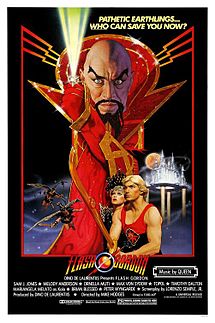
But that's not all! We then biked over to the Castro Theatre where we saw a double feature of Flash Gordon and Dune. It was a long night. Flash proved to be quite entertaining and a ton more campy then remembered from youth, while Dune remained gorgeous, strange, and totally befuddling to most of the group that hadn't read the book or seen the movie before. No surprise there, as that's what the studios thought the first time when they released the movie and gave movie goers a flyer just to try and follow along. Most of Book Qlub stayed awake for 90% of the movie, though afterwards, only two of us could pronounce Kwisatz Haderach. This book should probably never had been made into a two hour movie. More like a multi-season series, like Game of Thrones. That was Book Qlub and Sci-Fi Weekend! And, just for Laughs: Oil Emperor of Dune

Science Fiction Book Qlub 7: The Return

It happened!

After a bit of a stretch due to travel and summer vacations and whatnot we finally reconvened the SFSFBQ for yet another great installment.

We met down at the Chieftain at Howard and 5th, where we had Irish Nachos, Fried Mashed Potatoes, and beer! Yum!

Up for discussion this time around: Frederik Pohl's 1976 Nebula Award winning Man Plus. We chose this because someone requested we read a robot book. Unfortunately, while robots certainly show up in many books and are even main characters (Dan Simmons' Ilium and Olympos, Iain Banks' Culture series and Against A Dark Background, China Mieville's Perdido Street Station), the books out there that are classics and about robots are penned mostly by one guy mostly: Asimov. His Robot Series, and the contributions by Silverberg (Positronic Man) are definite must read classics, however some people in the Qlub had already read those books and the consensus was: they are fucking boring. They are. Come on, you have to admit it, they are. And they are hard to reread. So, we ended up more in the cyborg genre, which was close enough.

Man Plus is the story of changing a human into a being capable of surviving on Mars, via technological implantation and augmentation. The book brings up many questions of identity, manipulation via the senses and data, sexuality, and acceptance.

Some of the topics that came up were:

-Social acceptance and Manpons:


-Alien intelligence, evolution, and xenopsychology
-The trope of "Emergent" intelligence: The Terminator, Ken MacLeod's The Star Fraction.
-Proper bedside manner.

The general consensus of the group was: Man Plus was definitely not a bad read. It was quick, straightforward, and light, though none of the characters were very realistic and the ending left many lose threads dangling (they emasculate the main character... literally, but with the intention of someday returning him to a human body... but where were they going to get replacement parts for his junk?). It introduced to the reader many topics and ideas, and did not attempt to answer any of them, and portrayed some pretty dated ideas on future sexuality. That being said, that book is screaming to be updated.

We concluded SFSFBQ with a new genre to explore: Space Opera!

Science Fiction Book Qlub 6.5

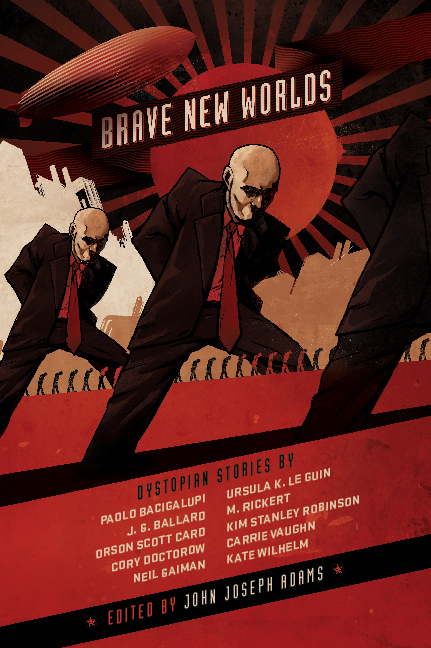
We continued on with Book Qlub 6.5, reading the latter half of John Joseph Adams' collection of dystopian stories, Brave New Worlds.

This entry may be updated later, when recollection of the meet-up is fleshed out, but we eventually chose our next novel to read:

Frederik Pohl's 1976 Nebula Award winning Man Plus.


Book Qlub 6

For Book Qlub 6 we met up at The Sycamore over on Mission Street. It was chilly, and the yummy French fries ran out, but there was beers and conversations, so it was a success! Yesssss!

We had many great discussions on the short stories we read out of the Brave New Worlds dystopian collection edited by John Joseph Adams. We covered a good foundation of dark and heavy stories, most of us agreeing that while they were awesome, one could only read so many in one sitting. Some of them ("O, Happy Day!", "Pop Squad") were quite intense, but great!

We had a long discussion of Shirley Jackson's classic "The Lottery." For many of us the signifigance and point of the story seemed pretty maleable. Here's what Jackson said about her own story in the SF Chronicle (July 22, 1948):

"Explaining just what I had hoped the story to say is very difficult. I suppose, I hoped, by setting a particularly brutal ancient rite in the present and in my own village to shock the story's readers with a graphic dramatization of the pointless violence and general inhumanity in their own lives."

http://en.wikipedia.org/wiki/The_Lottery

At any rate, there were so many good stories that we didn't get to (it's a pretty big collection) that we went ahead and decieded to split the stories in half and read the latter for Book Qlub 6.5.

Science Fiction Book Qlub 5!

The Qlub made it out to Pakwan on Monday. February 21.

Here's a short (and probably misremembered) recap of book qlub 5:

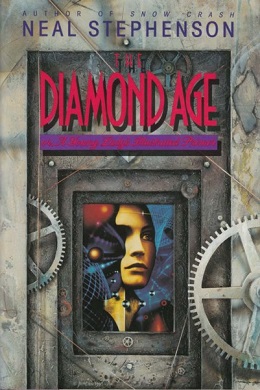
The book: The Diamond Age by Neal Stephenson

The overall assessment: thumbs up

The discussion: here's where I get a little foggy, the conversation jumped around a lot, but the conversation rambled through topics, including but not limited to: the rise of technology; the fall of interpersonal communication; the intrigue in the overlap of the primer and real life (both in moving the story along and the literal intersection of the two); the references of child soldiers; simultaneous classism and communism; the writer's engaging style; the abrupt ending and the possible reasons; and the author's overall writing style.

The location: Pakwan - we enjoyed delicious Indian/Pakistani food while discussing The Diamond Age. I believe everyone thought it was a good book qlub meeting location.

All in all, it was a successful book qlub, once again!

As for the next sci-fi book qlub reading, there was agreement to try out a book of short stories, but we did not settle on any particular book. Please send me suggestions by Friday and I'll send out an aggregate list for a vote. Remember we'd like to stick to Hugo and Nebula award winners, although I believe it was decided that this is not a rigid rule.

Onward to the next book!
Kristina

Germination!

Yea! The San Francisco Science Fiction Book Qlub has germinated!

After 3.5 meet-ups and 4 books, things are getting more established, and it looks like this little seedling is going to make it into the new year!

Born out of conversations amongst friends falling along a spectrum of Sci-Fi fandom, the SFSFBQ started as an exploration of Feminist Sci-Fi, and as an excuse for rabid Science Fiction fans to finally get around to reading classics that fell through the cracks.

Using the Nebula Award winners and nominees as a guide for choices (but not limited to), we've continued to read strong feminist writers as well as classics of the field and promising new writers. So far we've read:

The Left Hand of Darkness, by Ursula K. LeGuin
The Marriages Between Zones Three, Four and Five, by Doris Lessing
The Parable of the Sower, by Octavia E. Butler
The Windup Girl, Paolo Bacigalupi

Next up as the first SFSFBQ book for 2011 is a Sci-Fi staple: The Diamond Age: Or, A Young Lady's Illustrated Primer, by Neal Stephenson. So, grab a copy, get to reading and get ready for a meet-up sometime in February!

-SFSFBQ

ps- the previous posts are mostly for recording our meetups and books, you know, like a log. the format from here on out is to use this to record discussions and minutes of the our awesome Qlub, and for people to post comments to continue our mind-blowing discussions. so, please! comment! post! go for it!

pps- also, anyone in the Qlub can be an administrator, just contact me (mark) and I will knight ye.


Book Qlub 4.5: The Windup Girl

We made it out to Toronado on a rainy sunday, we finally had a quick half-assed discussion of Connie Willis' Doomsday Book, and though it was brief, we had a great discussion of Paolo Bacigalupi's The Windup Girl. Once again, it seemed that while everyone had issues with different aspects of the book, over all (and excepting what appears to be a glaring plot hole on Page 201) people really enjoyed the book, and as a debut novel, it was pretty impressive.

I personally recommend people follow up with Bacigalupi by reading his 2004 short story "The People of Sand and Slag."

Also, we decided that our next book would be sci-fi staple The Diamond Age: Or, A Young Lady's Illustrated Primer, by Neal Stephenson, and for a meet up the first Sunday of February, tentatively.

Book Qlub 4: Doomsday Book

Do to us being lame, we didn't actually get this book qlub off the ground. T'was very sad, but all it did was redouble our efforts to commit to book qlub!

Book Qlub 3: Parable of the Sowers


We settled on Parable of the Sowers, by Octavia E. Butler. We finally made it to the Pig and the Whistle, where we encountered many a loud drunk Irishmen. Nice enough, but also loud enough.

We had a very stimulating discussion, and while we had some problems with the book, most agreed it was an interesting story that painted an all too possible dark future.

------------------------------------------------

Correspondence:

We voted at our last Book Qlub to read, the Nebula Award Nominated, Parable of the Sower, by Octavia E. Butler. So, rent your books, read 'em up, and mark your calendars cause Book Klub 3.0 is scheduled for:

Tuesday, August 3rd, 2010 at 8:00 PM.

Location: TDB.

Yea!

-----------------------------------------------

Summation:

we had yet another highly successful and highly stimulating book qlub
(3). beers, veggie burgers, fish and chips, social apocalypse,
cannibals, the communes of mendocino, drinking water out of one's
bathtub, hippie-rednecks (or is it hippies-redneck?); just a partial
recap of some of the topics of our highly engrossing discussion.

we've made a decisions for our next book, via ro-sham-bo, and it is
Connie Willis' Doomsday Book, which continues
our theme of exploring female/feminist sci-fi writers and nebula award
winning novels AT THE SAME TIME!!! who knew it could be done?

so!
book: Doomsday Book
when: October 24th, 6 in the p.
where: as yet to be decided. as time gets closer we will find a consensus, but let us keep in mind this time places of lower decibelity (copyleft, 2010) where we can have a good two hour conversation without having to yell over drunkards.

and finally, we need to come prepared this time for book suggestions for Book Qlub 5! our guide has been nebula award winning novels or nominees, as well as feminist/female authors. as there are a +100 books that fit that description, we should have no lack of suggestions. take a look here, and familiarize yourself with some books that you might want to suggest for the group to read and why (note the latest book qlub rule: any member who reads a book on the list of winners or nominees outside of the Science Fiction Book Qlub cannot NOT suggest reading said book, just because they read the book, especially since they heard about the book through the San Francisco Science Fiction Book Qlub; just saying, now it's official, person who shall remain nameless).

so, let's get to reading!

-SFSFBQ

Book Klub 2.0: The Marriages Between Zones Three, Four and Five (1980)


Correspondence from our Second Book Qlub organizing. We eventually settled on Doris Lessing's The Marriages Between Zone Three, Four, and Five, from her Canopus in Argos series.

-----------------------------------

Next on the agenda: what's our next read? We agreed on Doris Lessing, and her Science Fiction opus is called Canopus in Argos and is the following books:

1. Shikasta (1979) – A secret history of Earth from the perspective of the advanced Canopus civilization that is thinking in eons rather than centuries. The history spans from the very beginning of life into our own future. The book ends with a metaphorical telling of the trial of Socrates.
2. The Marriages Between Zones Three, Four and Five (1980) – Depicts the influence of unknown higher powers on interactions between a series of civilizational "zones" of varying degrees of advancement that encircle the planet Earth. One zone is representative of an overtly feminine high civilization initially coupled by royal marriage to a militant and male civilization. The novel culminates with the latter, male, civilization allying with a tribal female realm again due to directives from Canopus.
3. The Sirian Experiments (1980) – Focuses, like Shikasta, on the history of Earth, but from the perspective of visitors from Sirius rather than Canopus. The Sirians are depicted as a highly managed society with fascist overtones, that attempt experiments on lesser civilizations while trying to mitigate the stagnation of their ruling class. The story is told from the perspective of Ambien II, one of a peer group of five who rule Sirius.
4. The Making of the Representative for Planet 8 (1982) – The story of the civilization on a planet that, due to interstellar "re-alignments", is slowly facing extinction, and Canopus's relationship with them. The story is greatly influenced by Robert Falcon Scott's Antarctic expedition, and is Lessing's homage to it.
5. The Sentimental Agents in the Volyen Empire (1983) – A story of Canopean agents on a less advanced planet; explores hazards of rhetoric and mirrors events in revolutionary societies such as Communist Russia.

If we really want to keep on with the gender theme, then I personally Vote for Book Number 2: The Marriages Between Zones Three, Four and Five. Check 'em out.

Okay, so, on the agenda for votes that we should have decided by, let's say this weekend.

--------------------------------------------------------------------

Summation:

Hoorah!

We have officially had our second highly entertaining and delicious
Book Qlub! We ate some awesome Sicilian pizza and had a wonderful
collection of Salads, while drinking some beers, wine, and arguing the
finer points of gender and social development in the science fiction
novel The Mariages Between Zones Three, Four, and Five, by Doris
Lessing.

Next up is Octavia E. Butler's Parable of the Sower! Let's get to reading!

-SFSFBQ

The Gender of Pronouns, an afterward to The Left Hand of Darkness

After our wonderful discussion on gender from our reading of Ursula K. LeGuin's awesome Left Hand of Darkness, I found this copy of the afterward by LeGuin from the 1994 edition of LHoD. Have a read!

----------------

THE GENDER OF PRONOUNS

by Ursula K. LeGuin

What a very dry, dull matter, of no conceivable importance to anyone but grammarians and pedants! How I wish it were so! But The Left Hand of Darkness is haunted and bedeviled by the gender of its pronouns, a wild, fierce, and intractable tribe.

Having invented a race of people who are essentially sexless except for a few days a month, when they become very highly sexed either as male or female, and for the duration of pregnancy and lactation, when of course they remain female having discovered the Gethenians, what was I to call them? In 1967, when I wrote the book, I called them all "he." I believed then that the masculine pronoun in English was genuinely generic, including both male and female referents. This is a pleasant and convenient belief. Unfortunately, the more you look at it, the less credible it becomes. Even more unfortunately, it has been adopted as one of the Thirty Nine Articles of Antifeminism. Some years after the book was published, I lapsed from the faith, and have remained unregenerate ever since. "He" means what it says, no more, no less alas!

What might I have used instead? Obviously the Gethenians' own languages would have nouns and pronouns appropriate to some, their ungendered "normal" state, and gendered nouns and pronouns appropriate to kemmer, their sexual period. Many Terran languages have neuter or bisexual pronouns, somer pronouns; many have gendered pronouns whose gender may or may not be the same as the sex of their referent, if their referent has a sex. The Romance languages are all of this kind.

Book Qlub 1: The Left Hand of Darkness


For posterity: Correspondence from our first Book Qlub 1, where we read Left Hand of Darkness. We didn't actually make it to the Pig and the Whistle; we met up in the middle of the week in front of the Jewish museum. It was nice and sunny out!

We pretty much all agreed it was a great book, and we had a very stimulating conversation on gender and Shifgrethor.

------------------------------------------------------

Hey Folks,

This Sunday, May 16th, we're going to have our first sci-fi book club to discuss "Left Hand of Darkness" by Ursula K. LeGuinn. Let's meet at 6:30 the Pig and Whistle on 2801 Geary at Masonic.

Following book club will be an entertaining, fast paced, high competition game of quiz night, also at the Pig and Whistle. So even if you haven't read the book, feel free to join us for some teambuilding...or destroying if you're thinking of the other teams that we will devastate with our trivia knowledge.

Oh yeah, and come with ideas for our next book.

----------------------------------------------------------------

Summation:

Well, successful book club, gang. It was a bit brief, I felt we could have talked about gender, saving face, foretelling, mysticism, and aliens all day long. My thoughts are that we need more time and some beers/wine/jamesons to really get the conversation going. So, I'm thinking no more lunch time book clubs. As far as bourbon and branch, I really want to check it out, but I've heard that the library area is small and impacted and that we would need a reservation for a table, which I'm not against, but I'm just saying, it might not be as lacks as meeting at an empty bar. Things to keep in mind.